Your team’s jersey serves as a platform which extends beyond its role as a sponsor advertisement. It is performance gear. The selection of basic materials determines how uniforms interact with the body, safeguard the design, and withstand the rigors of competition. Choosing the right esport jersey fabric is the first step in a successful bulk order.
Most buyers place their main emphasis on graphic design. However, the substrate, the actual cloth material, decides what the printed graphics will look like after ten wash cycles. In this guide, we break down the technical differences between micro-mesh, interlock, and poly-spandex blends to help you speak the same language as your manufacturer.
All trademarks are property of their respective owners. This article is informational and implies no affiliation or endorsement.
At a Glance: Quick Selection Criteria
Short on time? Use these essential rules to guide your procurement process for performance gaming textiles:
- Composition: Must be 100% Polyester or Poly-Spandex. Natural fibers (cotton) cannot hold sublimation ink.
- Weight (GSM): Target 140–160 GSM for breathable stage wear; go up to 180 GSM for a heavier drape.
- Texture: Choose Micro-Mesh for maximum cooling or Interlock for the sharpest print resolution.
- Stretch: Ensure at least 2-way mechanical stretch for comfortable seated posture.
What Characteristics Make Up Professional Esport Jersey Fabric?
Not all polyester is created equal. The fabric of an esport jersey needs to achieve three essential functions: moisture management, thermal regulation, and ink reception.
Moisture Wicking is Non-Negotiable
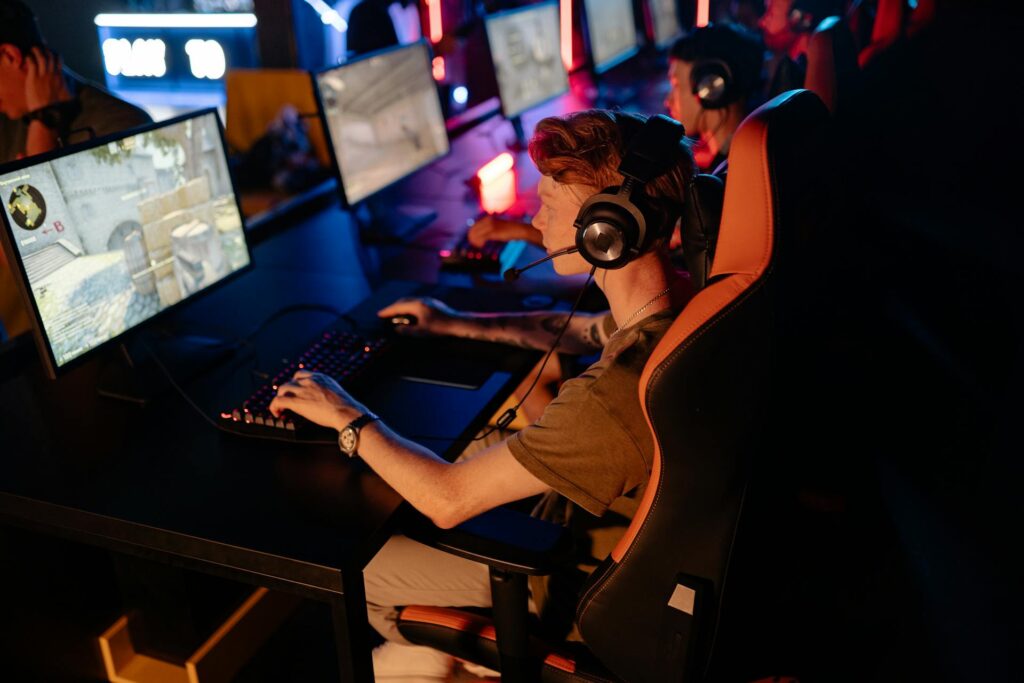
Stage lighting exposes athletes to high temperatures, and practice rooms often maintain warmer conditions during extended scrims. The fabric must use capillary action to pull sweat away from the skin. Performance knits use fiber-shaping technology (often tested under AATCC test methods) to channel moisture to the surface for evaporation—handling volumes of sweat that fashion materials cannot.
Sublimation Readiness
Esports visuals are loud. The dye sublimation method achieves this by using heat to convert ink into gas, bonding color directly into the fibers. This process requires a high polymer content. You cannot achieve vibrant, crack-free prints on natural fibers because the dye sites simply do not exist in cellulose.
Top 3 Fabric Types for Gaming Apparel
Three main categories define the market. When browsing a manufacturer’s catalog, you will typically decide between these textures.
1. Micro-Mesh (Birdseye)
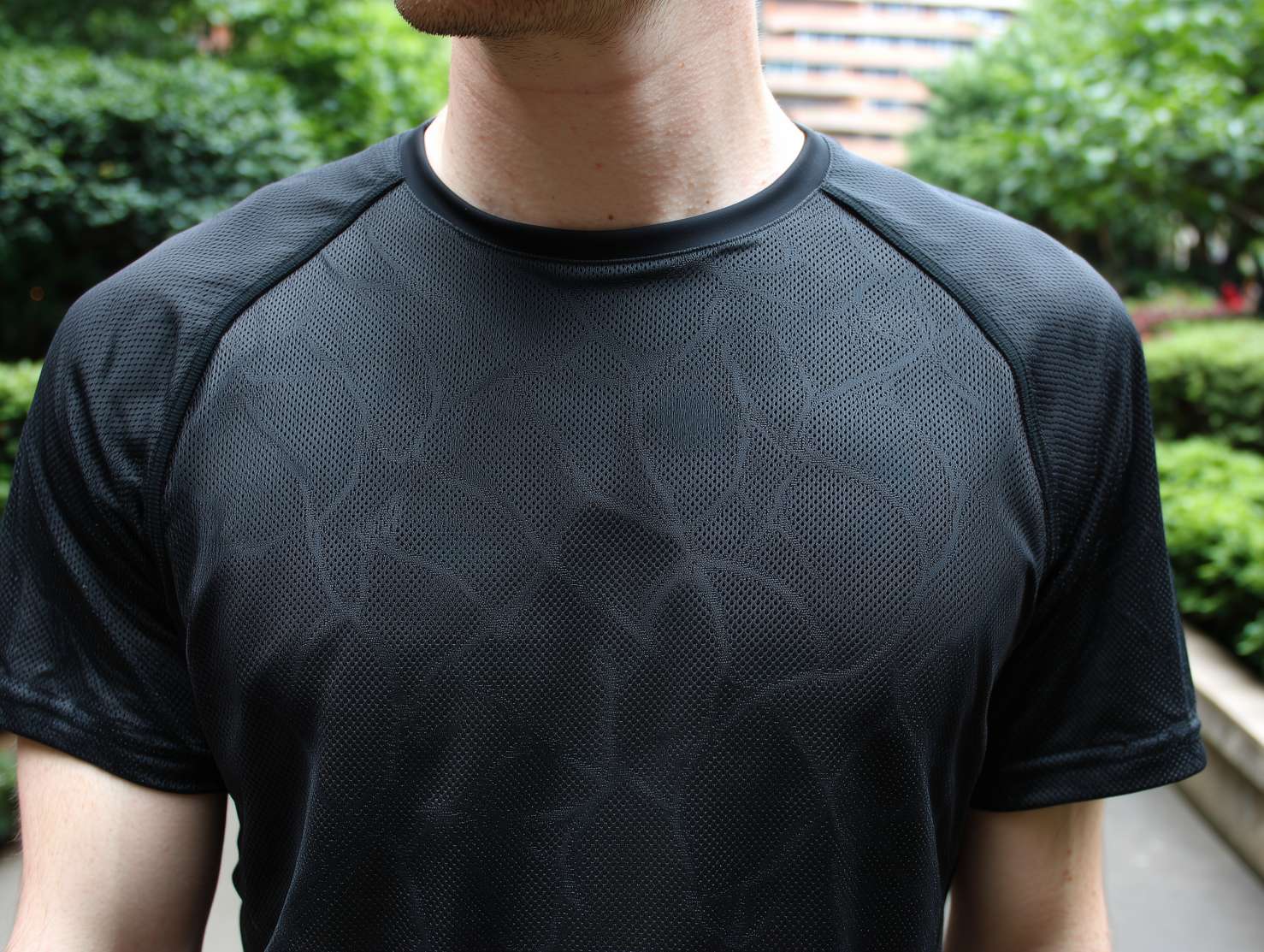
This is the industry standard. The fabric contains a small pattern of holes (often called “birdseye”) which forms a breathable grid.
- Best Application: High-heat environments and long match durations.
- Touch: Lightweight and airy.
- Pros: Superior ventilation and resistance to snagging.
- Cons: The textured surface can slightly break up extremely fine details in artwork compared to smooth knits.
2. Interlock Knit
Interlock is a double-knit variation. It looks the same on both sides and is tighter than a standard mesh. It offers a smooth canvas that acts like photo paper for your sublimation prints.
- Best Application: Premium jerseys where graphic clarity and complex logos are the priority.
- Touch: Smooth, silky, and substantial.
- Pros: High-definition print results; feels “expensive” and durable.
- Cons: Less air permeability than mesh.
3. Poly-Spandex Blends
Adding 5% to 15% spandex (elastane) creates a body-hugging athletic profile, often seen in “pro” style kits.
- Best Application: Teams preferring a modern, slimming fit.
- Touch: Cool, flexible, and slippery.
- Pros: Follows the player’s movements without restriction.
- Cons: Higher unit cost; can cling unflatteringly if the sizing isn’t perfect.
Why We Avoid Cotton Jersey Fabric
We often get asked about using cotton blends or standard cotton jersey fabric. While cotton provides comfort for relaxation, it fails in competition settings.
Cotton is hydrophilic. It absorbs moisture and holds it, rather than wicking it away. According to industry data on fiber properties, cotton can retain significant water weight, causing the shirt to become heavy and wet (the “sponge effect”) while losing its thermal regulation properties. Furthermore, you cannot sublimate onto cotton—the image will wash out immediately. Reserve cotton for custom team hoodies and travel gear.
Common Pitfalls When Sourcing Custom Jerseys
Trade-offs are inevitable in mass customization. Avoid these common procurement mistakes.
Ignoring Opacity (The “Sheer” Factor)
Going for the lightest fabric possible can backfire. Esport jersey fabric below 130 GSM often becomes semi-transparent, especially in white sections. Always request a weight that provides both defensive features and a professional appearance.
Overlooking Velcro Sensitivity
Many gaming chairs feature Velcro straps. Certain loose-knit fabrics will snag instantly if they rub against the hook side of Velcro. Tighter weaves, like Interlock, generally offer superior snag resistance compared to open-hole mesh structures.

Forgetting the Seated Posture
Most athletic wear is designed for running (standing upright). Esports athletes sit. Excess fabric in the front can bunch up, creating bulkiness. A fabric with drape and 2-way stretch prevents uncomfortable gathering.
A Checklist for Your Vendor
Before you choose a wholesale supplier, ask your account manager these questions to verify the material quality:
- What is the GSM? Target 140–180 GSM for jerseys.
- Is the wicking mechanical or chemical? Chemical treatments wash out over time; mechanical wicking (fiber shape) lasts the life of the garment.
- Can I see a sample print? Check blacks for richness on the specific texture.
- What is the composition? Confirm 100% Poly or Poly-Spandex.
Your team will achieve both a professional appearance and playing comfort by selecting appropriate materials. Whether you choose micro-mesh for breathability or interlock for smoothness, ensuring the right specs is key.
Ready to feel the difference? Request a fabric sample pack to compare these textures firsthand.
Frequently Asked Questions
What is the best fabric for esports jerseys?
The best fabric is typically a 100% polyester micro-mesh or interlock knit. These materials support dye sublimation printing and provide the moisture-wicking properties essential for comfort under hot stage lights.
What is the difference between Interlock and Micro-Mesh?
Micro-mesh features tiny visible holes for maximum airflow, making it highly breathable but slightly textured. Interlock is a double-knit fabric with a smooth surface, offering sharper print resolution and a heavier, premium feel.
Why aren’t esports jerseys made of cotton?
Cotton absorbs moisture rather than wicking it away, causing the shirt to feel heavy and wet during competition. Additionally, cotton cannot be dye-sublimated, meaning custom designs would fade or crack rather than being permanently dyed into the fibers.
What GSM weight should a gaming jersey be?
A standard high-quality jersey usually falls between 140 GSM and 160 GSM. Anything lower than 130 GSM may be too sheer (transparent), while fabrics over 180 GSM can trap too much heat for indoor arenas.